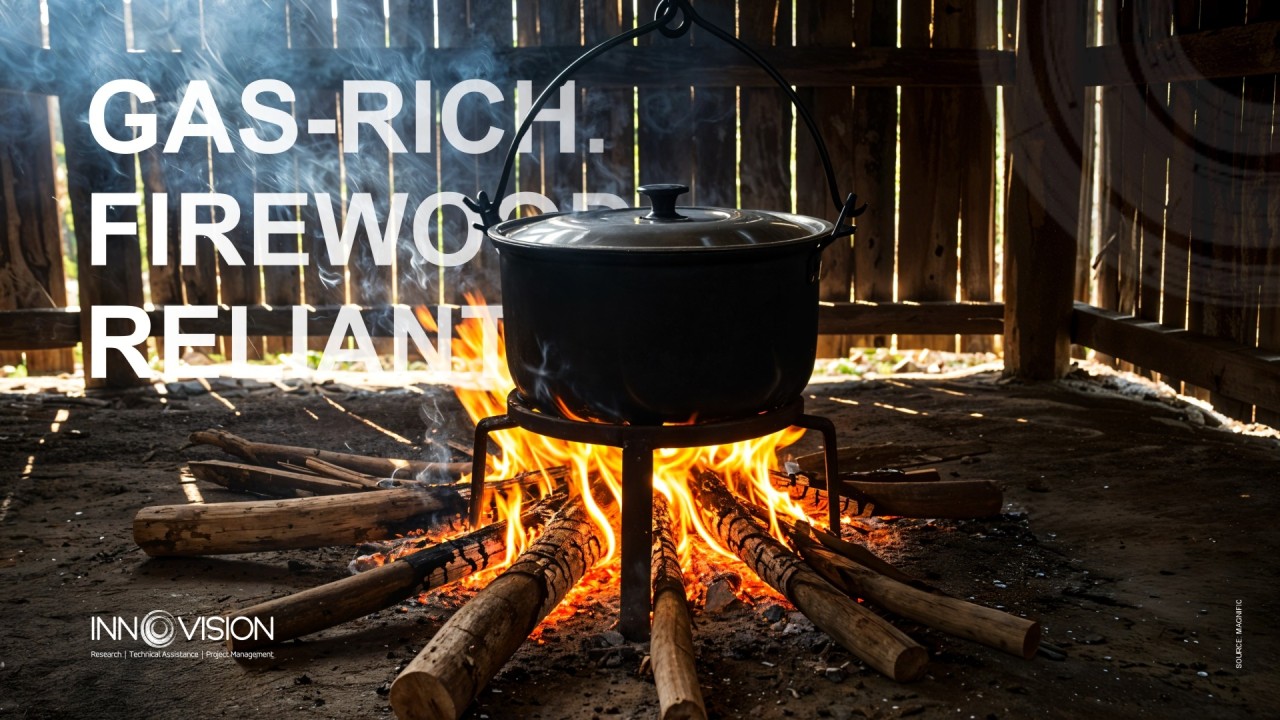
Nigeria holds 209 trillion cubic feet of natural gas reserves — yet 175 million of its citizens rely on traditional biomass for their daily sustenance. This is not merely an energy deficit — it is a systemic Environmental, Social and Governance (ESG) failure. From a climate perspective, it drives a loss of nearly 400,000 hectares of forest annually; socially, it causes approximately 128,000 premature deaths, predominantly women and children, due to household air pollution (Federal Ministry of Environment, 2024).
As we look toward the 2030 Universal Access Mandate, the conversation must move beyond simple stove distribution. To be truly bankable, the transition requires a sophisticated union between sub-national policy and innovative climate finance.
The primary bottleneck to scaling clean cooking in Nigeria is its current institutional orphan status. While the National Clean Cooking Policy (NCCP), approved in March 2024, provides a robust framework, efforts remain scattered across ministries. We have the Ministry of Environment leading on emissions, the Ministry of Petroleum Resources driving the National Gas Expansion Programme (NGEP), and the National Council on Climate Change (NCCC) managing potential carbon credits.
However, these efforts are often siloed at the federal level. For an ESG strategy to succeed, there must be an Institutional Overlay — a unified Clean Cooking Hub that coordinates these bodies and integrates them with the 774 Local Government Areas (LGAs) where implementation actually happens. Without this vertical alignment, the ambitious 25% annual access growth targets will continue to stall at the doorstep of the household (Nairametrics, 2025).
While global climate finance often prioritises the E in ESG, which stands for Environment, the Nigerian market is defined by the S — Social. With persistent inflationary pressures and the devaluation of the Naira, the upfront capital cost of clean cooking hardware is a significant barrier. As identified by the International Energy Agency (IEA), affordability remains the major constraint for nearly two-thirds of sub-Saharan Africans, with many households needing to spend over 10% of their income just to adopt clean solutions (IEA, 2025).
Sustainable growth in this sector requires moving away from hardware ownership toward service-centric models. Proven examples from neighbouring countries with similar market realities include:
Nigeria does not need to reinvent the wheel, but we do need to Nigerianise these successful regional frameworks. The Energy Transition Plan (ETP) targets 100% access by 2030 as the essential bridge to our 2060 Net-Zero future. For institutional investors and professionals within the ecosystem, the real opportunity lies in the connective tissue of the transition, the structures that turn ambition into household-level outcomes:
The clean cooking transition is one of the most significant climate finance opportunities in West Africa today. By addressing the institutional and affordability gaps with the same rigour we apply to traditional energy assets, we can move the transition from the boardrooms into the heart of every Nigerian home.
At Innovision Consulting Africa, we work at the intersection of ESG strategy, climate finance, and inclusive market systems across Sub-Saharan Africa. If you are designing clean cooking finance structures, developing sub-national implementation roadmaps, or building the institutional architecture to move Nigeria's energy access commitments from ambition to practice, we would welcome the conversation. Reach out at office@innovision-bd.com.
Sources: Federal Ministry of Environment (2024); IEA Clean Cooking Access in Africa Roadmap (2025); BURN Manufacturing (2025); National Petroleum Authority, Ghana (2025); Nairametrics (2025); EnviroNews Nigeria (2025)
Author: David Aderinola, ESG & Climate Finance Lead, Innovision Consulting Africa
.png)