Bangladesh produces over 17 million metric tons of vegetables every year. Less than 0.3 percent reaches export markets.
This is not a trade problem. It is a food safety problem, and the data makes exactly clear where it breaks down.
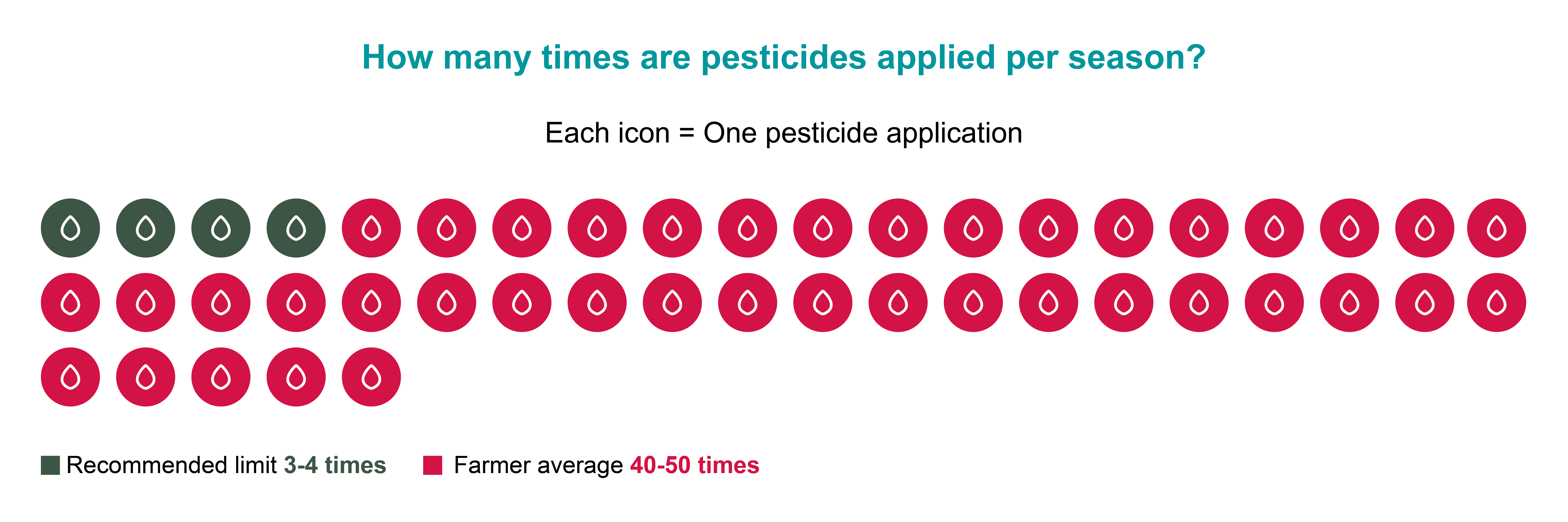
Farmers growing pointed gourd, one of Bangladesh's key export vegetables, apply pesticides an average of 40 to 50 times per season. The recommended limit is 3 to 4 applications.
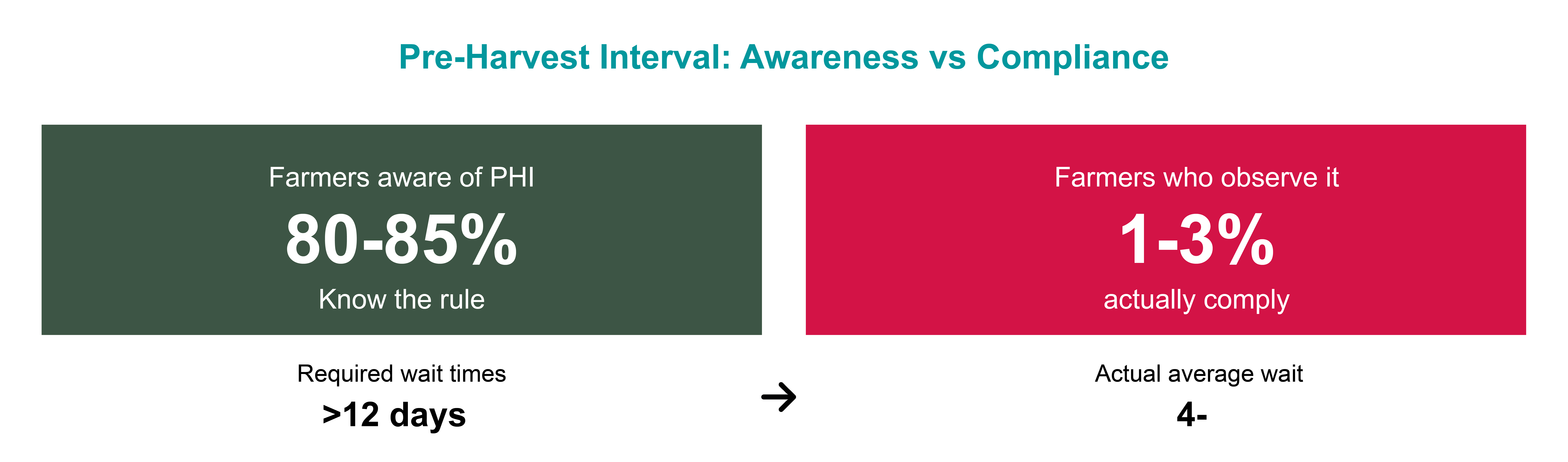
Pre-harvest intervals, the mandatory waiting period between the last pesticide spray and harvest, tell a similar story. Around 80 percent of farmers are aware of the requirement. Only 1 to 3 percent actually observe it. The average wait time before harvesting is 4 to 5 days, against a minimum standard of 12.
The consequences are predictable. Consignments fail Maximum Residue Limit checks in the EU and UK. In 2024–2025, rejection rates were so consistent that Bangladesh's Plant Quarantine Wing imposed a self-ban on teasel gourd exports to avoid a permanent official ban by European authorities.
This year's World Food Safety Day theme, From burden to solutions, gets at the core of what Bangladesh's vegetable sector illustrates. The burden is documented. The gap is not awareness. It is structured.
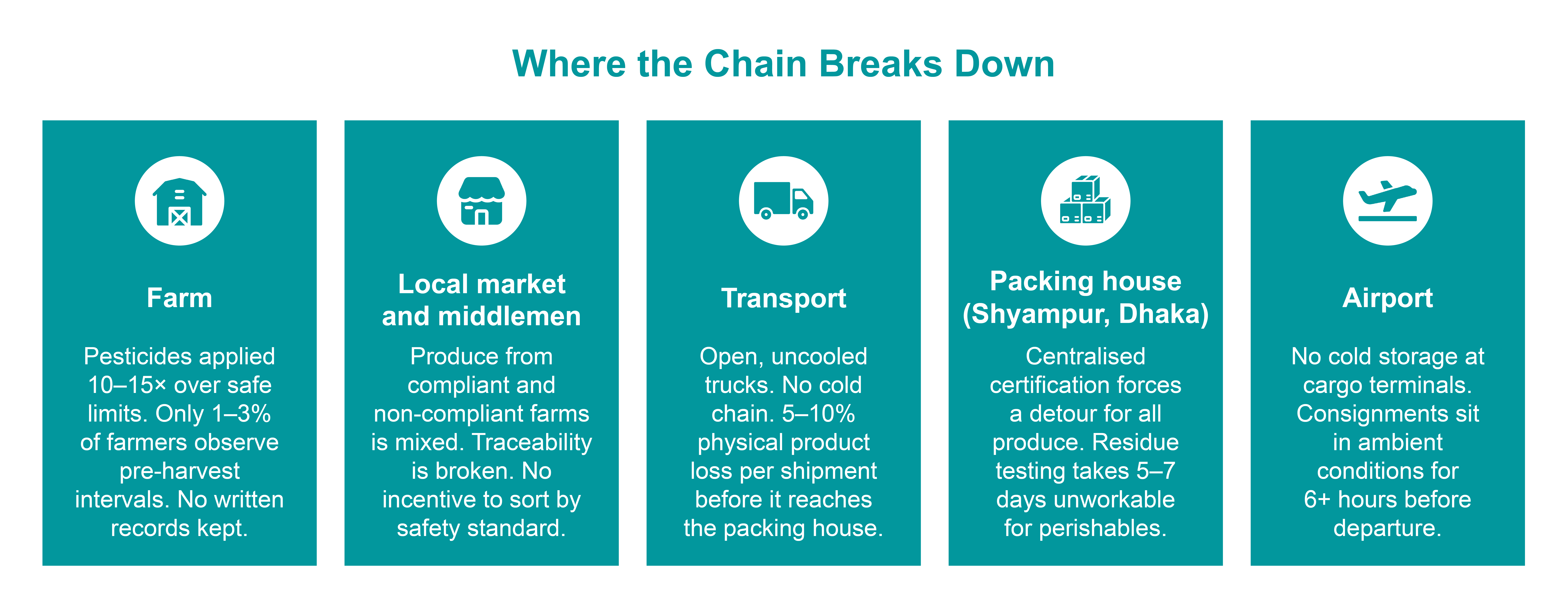
Farmers harvest quickly because market demand is immediate and cash is needed now. Most sell through informal middlemen rather than directly to exporters, breaking the traceability chain entirely. Cold storage is nearly absent from farm to airport. Residue testing takes 5 to 7 days, an unworkable timeline for perishable produce.
The system expects compliance at the end of the chain while enabling disorder throughout it.
Evidence from the SAFE BD Project,implemented by Swisscontact and funded by Standards and Trade Development Facility (STDF), a sanitary and phytosanitary capacity building initiative that Innovision supported, points toward specific, coordinated interventions.
Integrating biopesticides as a final pre-harvest application, rather than replacing chemical inputs entirely, is a practical bridge that reduces residue risk without asking farmers to abandon methods they rely on. Embedding packing and testing facilities within production hubs in Jashore and Narshingdi, rather than routing everything through Dhaka, cuts transit time and makes compliance feasible. Digitising farm-level record-keeping transforms traceability from a theoretical requirement into a verifiable practice.
None of these are complicated in concept. All of them require institutional coordination that has so far been missing.
Food safety cannot be a checkpoint at the airport. It has to be built into the value chain from the first pesticide application to the last mile of cold storage.
Bangladesh has the production capacity. What it needs is a system that makes compliance the path of least resistance, not the exception.
This piece draws on findings from the SAFE BD Project. Innovision Consulting works across agricultural value chains, trade, and market systems development in Bangladesh and internationally.
.png)