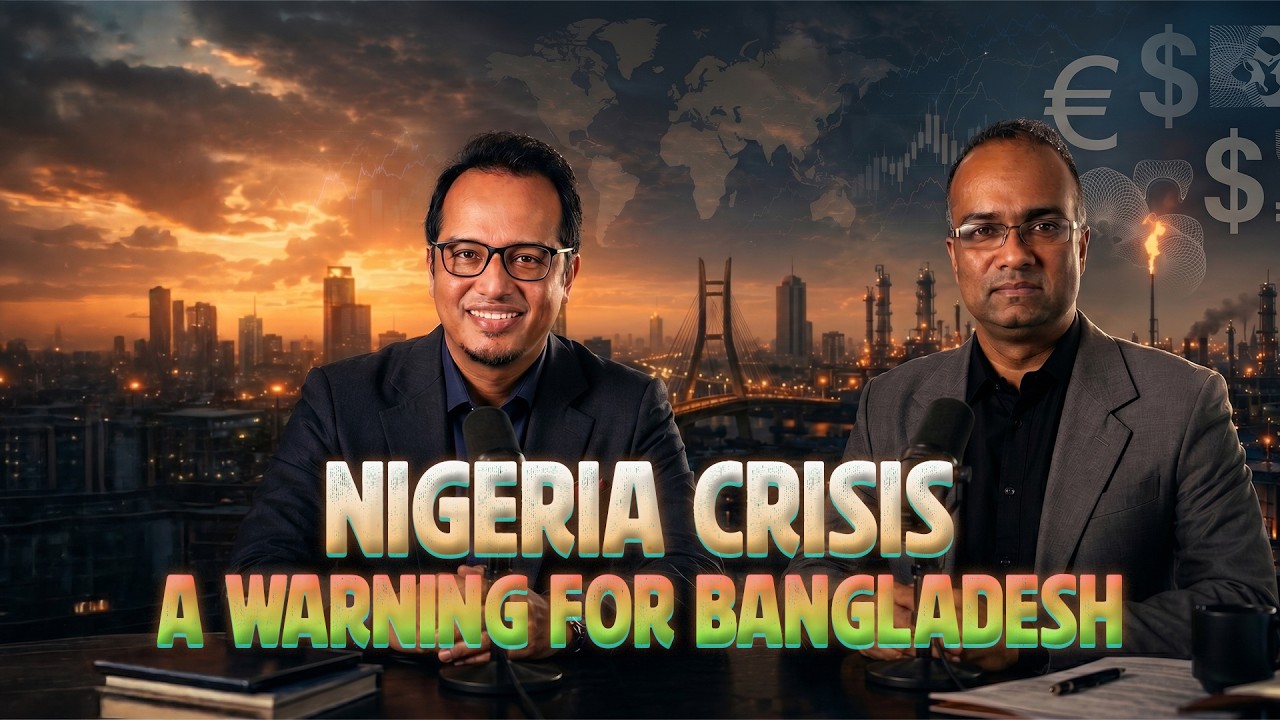
This episode of J&J Fireside is recorded from Abuja, where Md. Rubaiyath Sarwar, Managing Director at Innovision Consulting, has spent over a decade working across Nigeria's health and development markets. He is joined by Jyoti Rahman, fiscal economist, for a conversation that moves from malaria subsidies to currency reform, tracing what a country in economic freefall can still teach Bangladesh about the cost of easy fixes.
Nigeria's fight against malaria, the country's largest health burden, offers a case study in subsidy failure. Free bed nets, distributed at scale under WHO protocols, largely resurfaced in retail markets rather than household use, crowding out local net manufacturers entirely. A parallel pattern played out in malaria drug treatment: subsidies withdrawn between 2018 and 2024 pushed prices toward a genuine market equilibrium, but falling use of diagnostic testing means many patients now treat presumed malaria without confirming it, an outcome shaped less by policy than by the high personal cost of staying sick. The takeaway for Bangladesh: universal subsidies without an exit strategy distort incentives long after the giveaway ends.
President Tinubu's decision to remove fuel subsidies overnight in 2023 triggered immediate pain: the Naira fell from roughly 157 to over 1,400 per dollar, petrol queues stretched across highways, and inflation peaked near 33 percent. Three years on, the numbers suggest the trade-off is turning: inflation has cooled to roughly 15 percent, foreign reserves sit at an all-time high near $50 billion, and oil output has climbed to about 1.5 million barrels a day, enough for Nigeria to start supplying fuel to neighbouring economies. The Naira, unlike many currencies under pressure this year, has held steady rather than continued sliding, a sign it may have found its real value.
Nigeria's tax-to-GDP ratio has long trailed even Bangladesh's, one of the lowest globally. The 2025 Nigeria Tax Act and this year's tax harmonisation widen the net for higher earners while easing the burden on small businesses and basic food, alongside a mandatory bank recapitalisation drive that has built a multi-trillion Naira banking sector. The harder question, raised in the conversation, is whether tax breaks for entrepreneurs actually generate the investment, jobs, and follow-on revenue they promise, or simply become concessions with no downstream return. Bangladesh faces the same test, where policies are too often designed in isolation rather than as connected systems.
Despite currency collapse, fuel shortages, and years of political volatility, Nigeria has not unravelled. Analysts increasingly expect President Tinubu to be re-elected next year with limited opposition, an unusual outcome in a historically contentious political landscape. The episode borrows its title from Chinua Achebe's Things Fall Apart to make the opposite point: even under sustained economic pressure, institutions and society can hold together longer than expected, a reminder that global south economies are often more resilient than the prevailing narrative allows.
With Nigeria ramping up production and prioritising fertiliser, diesel, and LNG exports, largely the same inputs Bangladesh is currently short on, the conversation points to a concrete opening for bilateral trade, an idea Innovision is actively exploring.
.png)