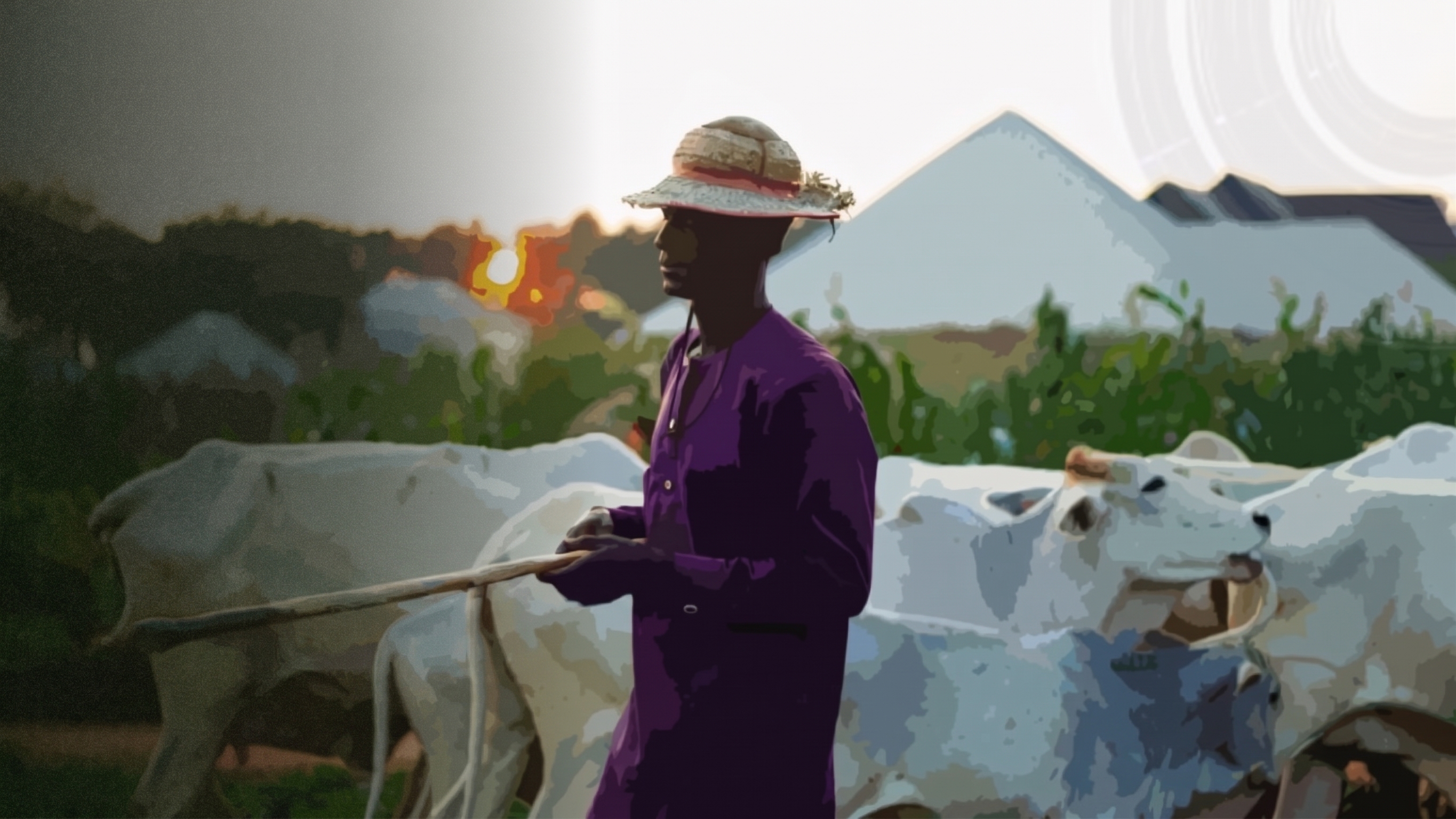
Nigeria's livestock sector sits at an interesting point in the climate conversation.
Livestock production is a significant source of greenhouse gas (GHG) emissions. At the same time, the farmers, animals, and communities that depend on the sector are increasingly exposed to rising temperatures, changing rainfall patterns, longer dry seasons, water scarcity, disease and declining feed availability.
These are not two separate problems.
The Synthesis Report on Environmental Impact of Nigerian Livestock Value Chain brings both sides into view. Its findings show a sector that contributes significantly to Nigeria’s emissions while also operating in an environment where climate change is making production more difficult.
For Nigeria, the findings point towards a difficult question: how can the livestock economy reduce its environmental footprint while becoming more resilient to the conditions it will increasingly have to operate in?
The scale of the emissions challenge is considerable. According to the report, livestock greenhouse gas emissions accounted for approximately 69.2% of total GHG emissions in Nigeria, making livestock the country's largest source of GHG emissions. The report also projects that agricultural GHG emissions could increase by 94% by 2050 compared with 2010 levels.
The trend is already visible. Between 2000 and 2015, livestock emissions increased by 34%, rising from 21,877 Gg CO₂-equivalent to 29,375 Gg CO₂-equivalent.
Nigeria's climate policy framework, therefore, includes measures to improve livestock productivity through better grazing and feeding management, while promoting indigenous knowledge and practices that can support climate-resilient livestock systems.
Nigeria has also committed, under its Nationally Determined Contribution to the Paris Agreement, to an unconditional 20% reduction in business-as-usual emissions by 2030, with a conditional target of 45% dependent on international financial assistance, technology transfer, and capacity building.
Livestock is therefore part of a much wider climate challenge. The country has to pursue emissions reductions while also protecting agricultural systems and livelihoods that depend on livestock production.
The report also shows how climate conditions are beginning to affect livestock productivity.
Higher temperatures can affect water availability, animal productivity, reproduction, and health. Changes in temperature and rainfall can also influence the quantity and quality of forage. The study notes that animals consume 3–5% less feed for every degree increase in temperature, while heat stress can reduce productivity and fertility and leave animals more vulnerable to disease.
For farmers, these changes do not arrive as climate statistics.
They may appear as lower milk production, pasture becoming harder to find, water becoming less reliable, or animals becoming more susceptible to disease. Each change adds costs or reduces household income.
The economic implications can become significant when these effects accumulate across a livestock system. The report cites projections that a 2°C increase in temperature could reduce livestock numbers by 7–10% by 2050, along with estimated economic losses of $10- $13 billion.
Taken together, these findings suggest that climate change is not only an environmental concern for livestock. It is also becoming a question of productivity and livelihoods.
Consider two of the most basic requirements of livestock production: feed and water.
The report’s field survey found feed and water scarcity to be major concerns among livestock farmers. Pasture was the primary source of livestock feed for 70% of respondents, followed by hay at 46% and crop-processing by-products at 26%.
That dependence matters because changes in temperature and rainfall can affect grassland productivity and forage availability.
The report also notes that increasing temperatures, water scarcity, and higher atmospheric CO₂ concentrations can affect forage quality, including its digestibility and concentrations of nutrients such as protein, iron, and zinc.
The effects eventually reach the animal. Lower-quality or less available feed can increase nutritional stress and affect meat and milk production.
Water presents a similar challenge. Livestock farms surveyed in Edo and Kaduna showed substantial dependence on boreholes, while feed and water scarcity were among the leading concerns reported in surveyed communities.
The findings point to a broader connection between ordinary production constraints and climate vulnerability. If the resources livestock depends on become less reliable, maintaining the productivity of businesses and households built around livestock becomes harder.
The implications extend beyond the animals.
Livestock production depends on people to care for animals, process products, transport them, and bring them to market. In settings where mechanisation remains limited, human labour is an important part of the value chain.
Evidence cited in the study shows that worker productivity begins to decline when temperatures rise above 24–26°C, while temperatures above 34°C can reduce work capacity by as much as 50%. Droughts, floods and other extreme weather events can also contribute to rural displacement and affect labour availability.
This adds another dimension to the climate-livelihood connection. Conditions affecting animal productivity can also affect people's ability to work productively across the livestock value chain.
For a sector that supports rural households and contributes to food production, the implications extend beyond the farm.
Animal health adds another layer to the challenge.
The report's field survey found disease prevalence to be a major constraint in nearly all surveyed states, with reported prevalence ranging from 67% to 83%, except in Edo. Farmers also reported limited access to nearby drug stores and veterinary services, alongside a shortage of trained veterinary personnel.
Climate variability can worsen these existing weaknesses.
Respondents in the North-Eastern region reported that dry-season feed and water scarcity and wet-season livestock diseases contributed to malnourished animals and lower milk production. The study also highlights how temperature changes can affect the geographical range of some disease vectors, potentially altering patterns of livestock disease transmission.
Taken together, the findings point to a close relationship between climate resilience and animal health.
Climate information may help farmers anticipate changing conditions, but responding to those changes also depends on access to veterinary services, preventive measures, appropriate medicines and the knowledge to act on available information.
This is part of what makes the livestock-climate relationship difficult to reduce to a single intervention.
The report points to several constraints that could make a transition towards more climate-resilient livestock systems difficult. These include limited policy frameworks tailored specifically to climate-smart livestock farming, shortages of specialised professionals and limited awareness among livestock producers.
These constraints affect farmers' ability to access information, adopt improved practices and respond effectively to climate-related risks.
At the same time, the response does not have to begin from scratch.
Across Nigeria's livestock value chain, approaches already aim to improve productivity while responding to environmental pressures. These include innovative feed systems, community-based animal health services, resilient breed management and climate-smart extension.
The report’s findings raise a further question: can approaches like these move beyond individual interventions and become part of a wider livestock system?
Can farmers access them consistently? Can extension and veterinary services support them at scale? Can policy and finance help make improved practices more accessible?
These questions lead into the next part of the conversation.
Read together, the findings suggest that emissions and adaptation cannot be considered entirely separate questions for Nigeria's livestock sector. A sector that needs to reduce its environmental footprint is also a sector whose productivity is increasingly shaped by a changing climate.
The climate–livestock paradox is therefore not simply about what livestock is doing to the climate.
It is also about what a changing climate is doing to livestock—and what that means for the people and economies that depend on it.
The second part of this series will examine what a climate-smart transition could look like, and whether Nigeria can adopt approaches that are already showing promise and scale them to meet the livestock economy's needs.
This is Part One of a two-part series based on the Synthesis Report on Environmental Impact of Nigerian Livestock Value Chain, prepared by Innovision Global Consulting Limited for Heifer International Nigeria in August 2023.
Author: Divine Nwoye, Communications Associate, Innovision Consulting Africa.