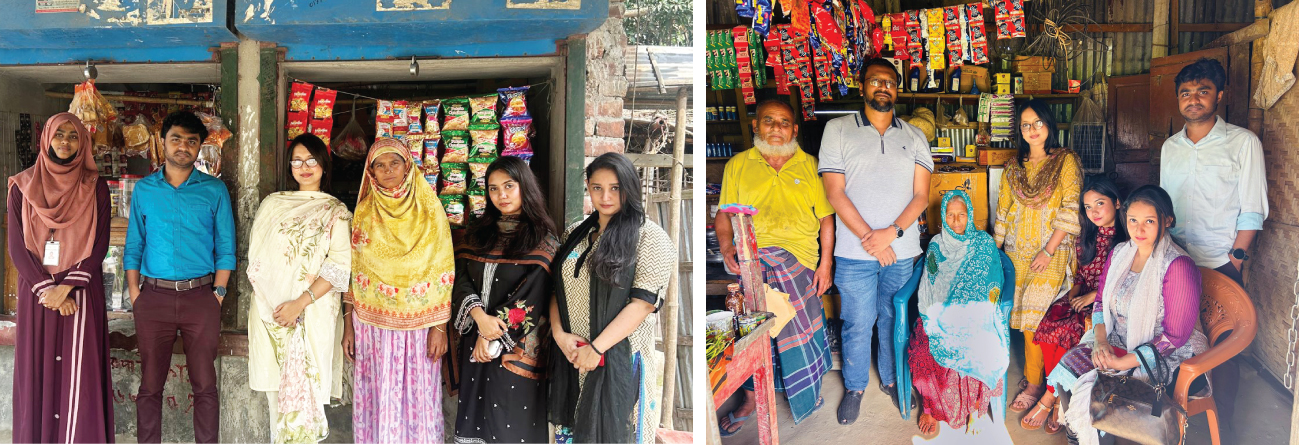
Innovision Consulting and ShopUp recently conducted a field visit under the Porshi Project in Rangpur and Dinajpur from 4–7 April, engaging directly with women entrepreneurs who are part of this growing initiative.
The Porshi Project is a last-mile, tech-enabled e-commerce initiative designed to transform women in rural and semi-urban Bangladesh into mobile micro-retailers. Implemented by ShopUp in partnership with Innovision, the initiative responds to a persistent challenge in rural markets: limited access to formal supply chains, income opportunities, and digital tools for women-led micro-enterprises.
Through the program, women are trained to operate as community-based entrepreneurs, using mobile technology and the Porshi App to place orders, manage inventory, and coordinate deliveries within their local areas. The initiative is closely integrated with ShopUp’s B2B commerce platform Mokam, which connects them to a broad portfolio of fast-moving consumer goods, enabling them to serve household demand more efficiently while earning sustainable income.
Beyond digital onboarding, the program places strong emphasis on financial literacy, entrepreneurship skills, and confidence-building, ensuring participants are not only users of a platform but active market participants in their communities. By shifting women from informal income activities into structured micro-retail roles, the project aims to strengthen both household resilience and local market efficiency.
To date, the Porshi Project has supported the onboarding and training of women across multiple districts, with a long-term vision of scaling to thousands of entrepreneurs nationwide.
During the recent field visit, the team conducted focus group discussions (FGDs) with 33 Porshi entrepreneurs to assess post-training outcomes. The findings show a clear shift: many women reported increased confidence in managing their businesses, greater familiarity with digital tools, and a stronger sense of identity as entrepreneurs. Several participants also shared that they now independently travel to nearby locations to deliver products, something they were previously hesitant to do.
This shift reflects the improved economic activity and a deeper social transformation: women increasingly introducing themselves as entrepreneurs and actively participating in local commerce networks.
.png)