Bangladesh is experiencing its first significant decline in female labor force participation in over a decade, raising serious concerns about economic resilience as the country approaches its graduation from Least Developed Country (LDC) status in 2026.
New data from the Bangladesh Bureau of Statistics (BBS) Labour Force Survey 2024 shows that the female workforce fell from 25.3 million in 2023 to 23.7 million in 2024. At a time when Bangladesh faces the loss of preferential trade access and concessional financing, experts warn that declining women’s employment could weaken productivity, exports, and household stability.
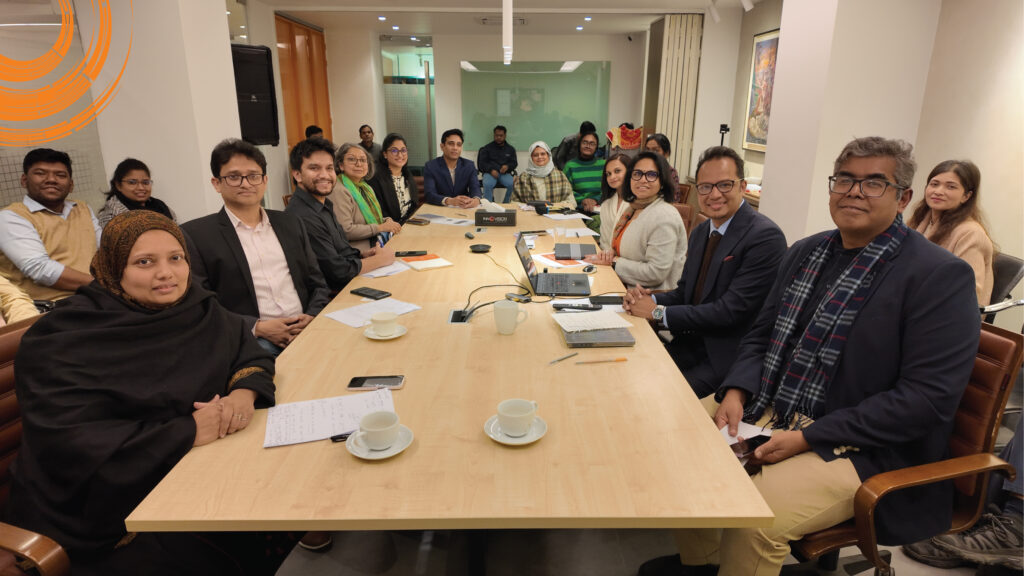
To address this emerging challenge, Innovision Consulting, in collaboration with the Bangladesh Research Analysis & Information Network (BRAIN) and Voice for Reform, convened a high-level policy dialogue titled “Female Employment as a National Opportunity for Advancing Economic Reform in Bangladesh” on 5 January 2026 at Innovision’s head office. The dialogue brought together policymakers, political leaders, economists, private sector representatives, civil society organisations, women’s groups, media, and development partners.
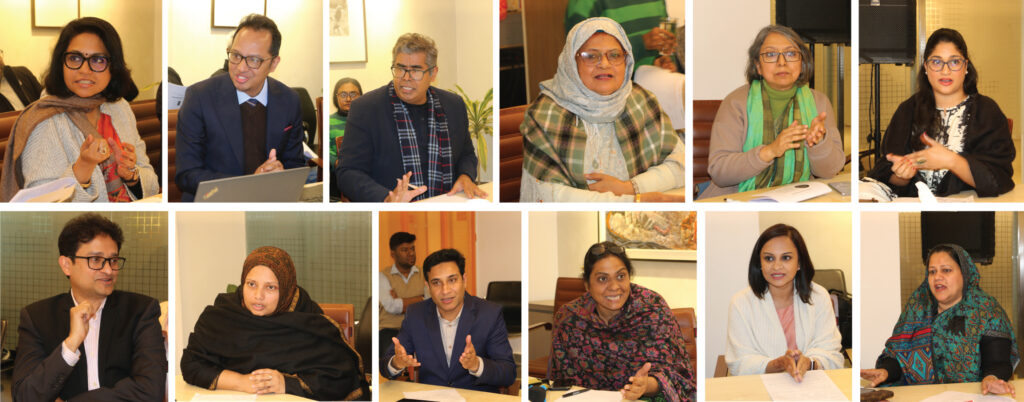
The discussions highlighted that women’s participation is declining most sharply in urban areas, where labor force participation dropped from 25.1% to 22.5%. Shrinking manufacturing jobs and automation in the Ready-Made Garment (RMG) sector, which has reduced factory employment by over 30%, have disproportionately affected women in sewing and trimming roles. Dr. Quayyum Ara Begum, Secretary of the Planning Commission, explained that the agriculture sector has also lost a significant share of its women workforce, as many migrated to informal parlor jobs, leaving vacancies largely unfilled.
The dialogue further revealed a growing mismatch between skills and job opportunities for educated women. Graduate degree holders now face unemployment rates nearly six times higher than the national average for women, while 95.96% of employed women remain in informal work, limiting security, skills development, and career progression. Professor M. Niaz Asadullah noted that formal sector employers often view women’s employment as a poor investment, stressing the need to incentivize hiring out of genuine interest rather than obligation.
Participants agreed that women’s employment is not just a social concern, but a macro-economic necessity. Comparative examples from Vietnam, where female labor force participation exceeds 70%, show how sustained women’s employment drives export growth and poverty reduction. With Bangladesh set to lose preferential trade access and concessional financing post-LDC graduation, mobilizing the female workforce is critical for boosting productivity, exports, and fiscal revenues. Marginalized groups, such as women with disabilities, remain highly excluded, with an employment rate of just 12.8%, compared to 47.59% for men.
The dialogue concluded with a roadmap for reform, highlighting the urgent expansion of affordable childcare, strengthening workplace safety and anti-harassment enforcement, improving safe transport and mobility, and creating stronger incentives for private sector hiring and retention of women. Addressing social norms around care, Nabila Khan, owner of Divine Beauty Lounge, emphasized that the mentality around sharing childcare responsibilities and household chores should evolve from a male perspective, as it has already progressed significantly from a female perspective.
Participants agreed that reversing the decline in female employment is both a policy and economic imperative, with dual-earner households proving more resilient to global shocks and inflation, making women’s participation a strategic opportunity for Bangladesh’s post-LDC growth and reform agenda.
.png)